← Volver
12/07/2017
FCC Medio Ambiente’s Castile and León branch signs a collaboration agreement with the University of Salamanca
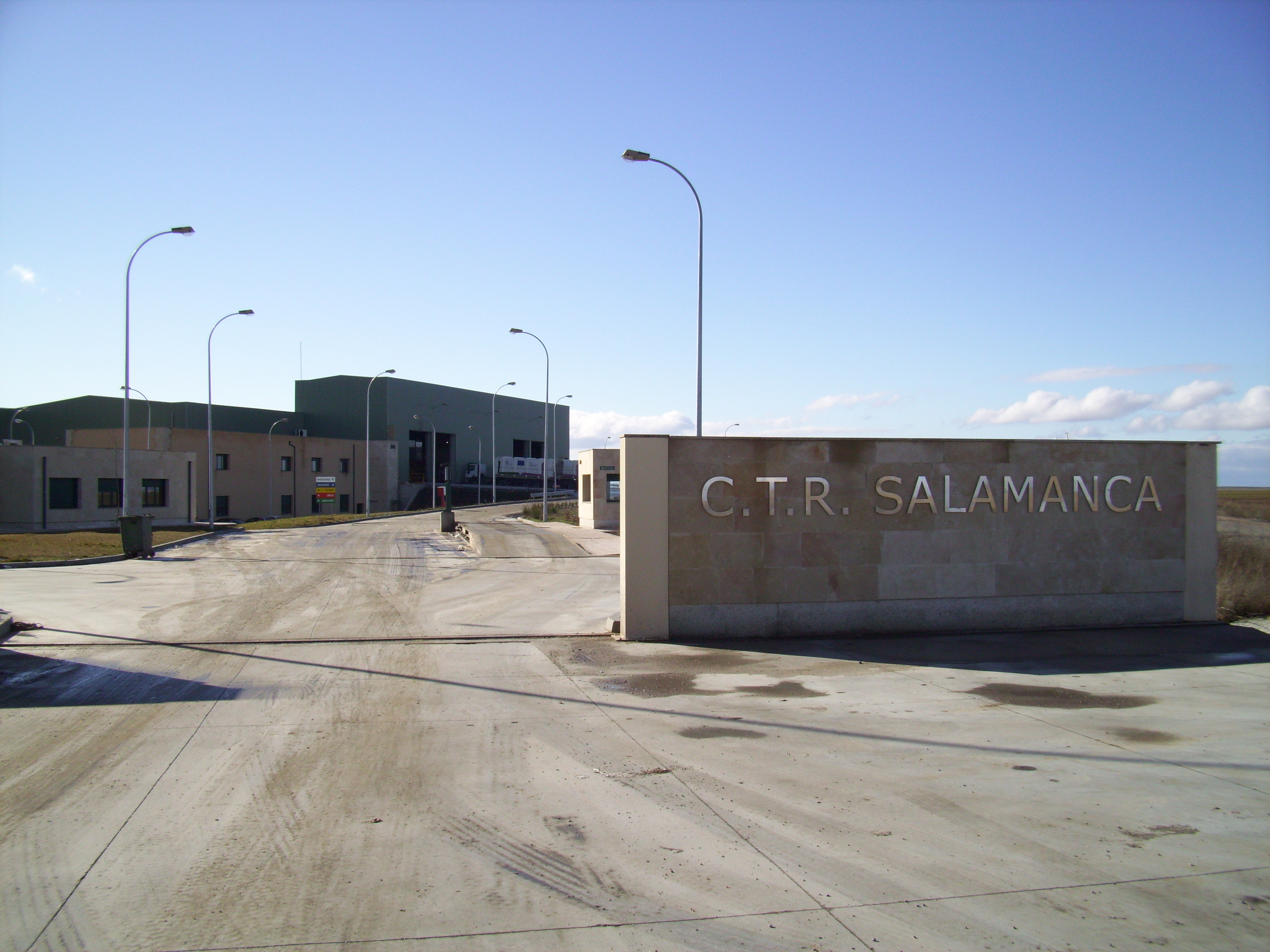
FCC Medio Ambiente’s Castile and León branch has signed a collaboration agreement with the Chemical and Textile Engineering Department of the University of Salamanca. Under the agreement research will be conducted into the “Application of magnetic nano and macro-particles for treating run-offs and leachate” at the Gomecello Waste Treatment Centre (Salamanca).
This agreement is framed within FCC Medio Ambiente’s strategy and commitment to innovation and the use of the best technology. FCC Group has a solid programme of innovation and works jointly with various universities and research centres.
In the framework of this research, the University of Salamanca and FCC Medio Ambiente have signed an agreement of academic practices educational cooperation in which a student will develop the following activities in the Gomecello Wastes Treatment Centre laboratory:
- Application of nano-particles/micro-particles for treating leachate by various methods.
- Pollutant absorption tests.
- Analysis of environmental parameters to determine the evolution of the pollutants absorption.
- Possibility of conjugation by biological reactor and/or Fenton reaction (advanced oxidation process).
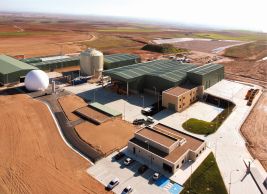
The Gomecello Waste Treatment Centre serves a population of nearly 336,000 in the province of Salamanca. The facility treats solid urban wastes – the “rest” not placed in yellow bags – and gardening wastes.
FCC Medio Ambiente has managed the plant for nine years and the contract includes the managing of the six transfer stations in the province. The facility has a treatment and sorting area, a biomethane production area, a composting and refining area, a rejections deposit and a leachate treatment area. The composting installations were recently enlarged with a new compost maturing building measuring 113 x 40 metres.
In 2016 some 131,000 tonnes were treated in the centre, generating more than 2 million kWh. Nearly 11,749 tonnes of compost were also produced and 6,680 tonnes of sub-products were recovered.