
CEOs come together as GO Expansion project enters vital development phase
- The CEOs from five of the world’s largest transportation and construction companies continue to share expertise in their partnership to accomplish an unprecedented transit expansion in Toronto and the surrounding region. The heads of major firms Aecon, Alstom, Deutsche Bahn E.C.O. Group, and FCC joined Metrolinx CEO Phil Verster for a project launch meeting recently in Toronto. Metrolinx News was on hand as they discussed the next steps for the transformational GO Expansion project – including the challenges and opportunities.
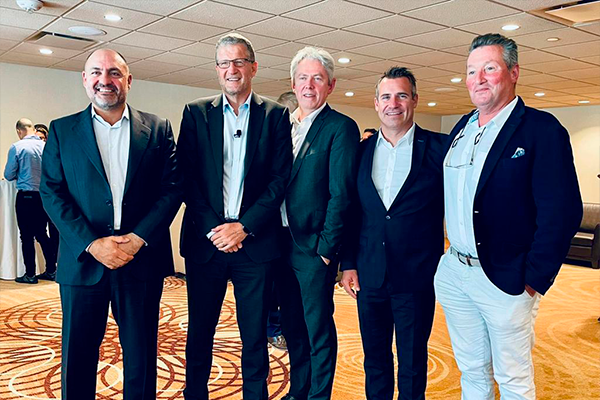
With the winning bidder – ONxpress Transportation Partners - on board, the multi-billion dollar GO Expansion project is underway.
But first, you might be wondering: what is GO Expansion? Why does it matter? The answer is simple.
It’s a massive expansion of passenger rail service across the Toronto region. When it’s done, this won’t be your parents’ GO Train anymore. GO Expansion will bring two-way, all-day GO Train service across the main GO lines. There will also be faster trains, and service every 15 minutes (or better).
It’s a project that will change the way people use transit in Canada’s most populated area.
Now entering the development phase
The ink is barely dry on the contract to design, build, operate and maintain the new era of GO Transit service. As Phil Verster, Metrolinx President and CEO, says, “Now is the time the rubber hits the road.”
That means Metrolinx and the newly-formed company ONxpress (the successful proponent) are immediately diving into what’s known as a ‘development phase.’
In this phase, the teams will work together for the next two years to finalize everything. From the project scope and pricing to design and construction schedules, this stage is all about establishing a foundation.
Two years might sound like a lot, but to pull off what Verster calls “a total transformation of what the GO network looks like,” it’s not a ton of time.
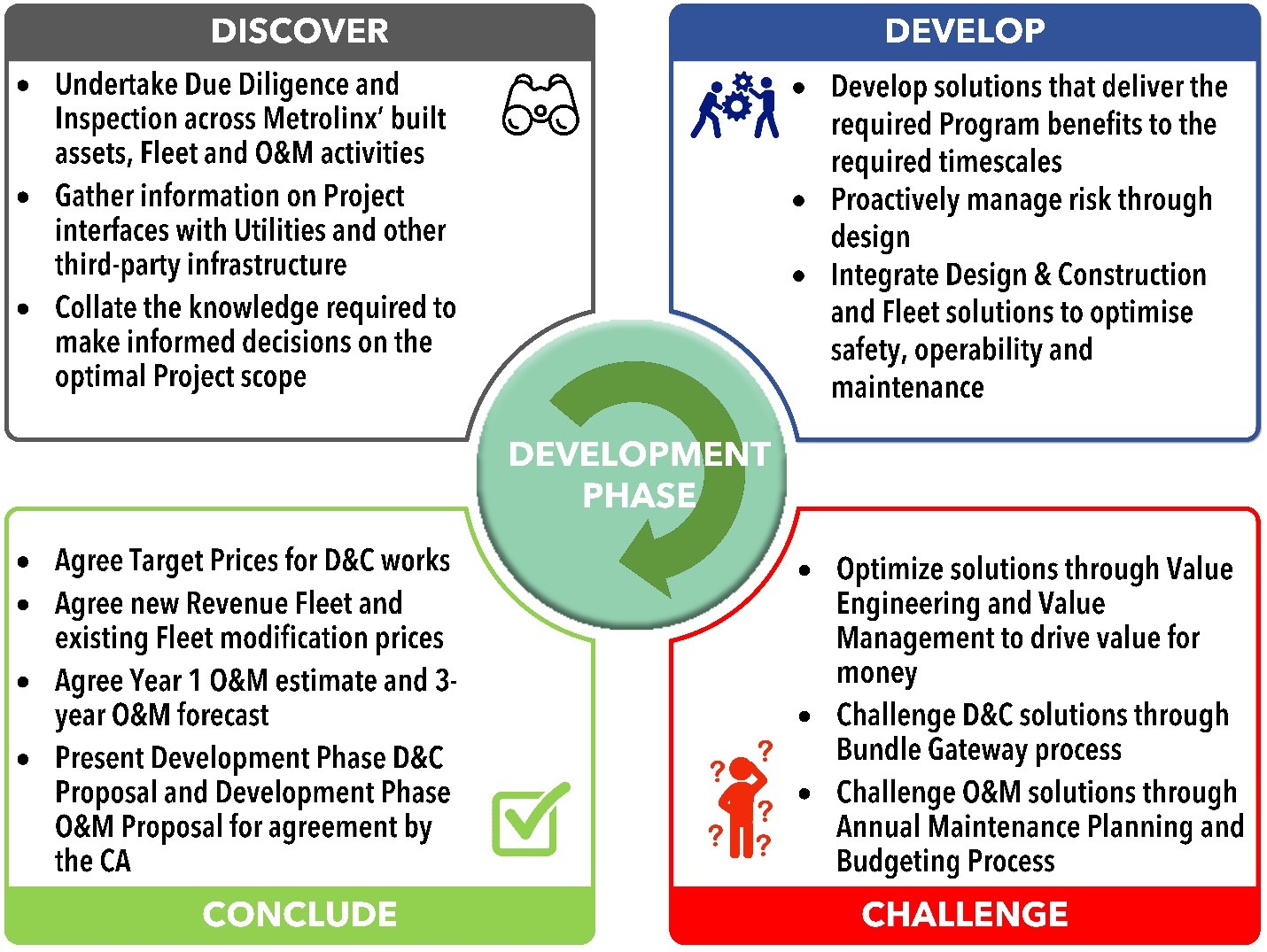 And while planning is taking place, there’s already more than $10 billion of preliminary GO Expansion work underway. This work will modernize stations (including Union Station), build new tunnels and bridges, and much more.
Challenges and opportunities facing GO Expansion
“There couldn’t have been a better time to build this project,” says Verster.
That might sound a bit surprising coming from the man at the precipice of a massive transit build – in a world feeling the affects of COVID-19, inflation and international conflict.
But as Verster notes, in a post pandemic world, transit is changing. He predicts that with the conventional workday evolving, people will need shorter, more frequent trains throughout the day. Verster says now is the time to evolve our transit infrastructure.
Add this to a demand for transit and increasing migration to the Greater Toronto and Hamilton Area – and the pressure will only continue to rise for better public transit.
One of the big players on the GO Expansion team, Alstom Americas President & CEO Michael Keroullé, couldn’t agree more.
“You can't just add lanes on the highway; you need something much bigger,” Keroullé says.
“I completely disagree with anyone that says this plan is too big. We are very confident the GO Expansion program will be great for GO Transit customers, and exactly what this region needs.”
It’s clear the pandemic has presented opportunities to accommodate changing work styles. However, it has also brought many challenges for transit projects.
Attracting the top talent
The construction world is not immune to the labour shortage facing much of the globe.
And with so many projects happening in North America, the GO Expansion and ONxpress teams need people to help.
The shortage may appear to present worries for GO Expansion. But given the project’s importance, these CEOs are confident people will be eager to contribute.
Pablo Colio, CEO of FCC Group, says that with a project of this size and scope, attracting the right people is very doable.
“The excitement has been set, and I think the goals of this project should be enough to attract the best people,” says Colio.
Jean-Louis Servranckx, President and CEO of Aecon, is even more bullish on bucking the labour shortage trend.
“I’m confident we are going to be able to attract really good people,” he says.
“We have been dreaming about this two-year development phase, where together we can make it happen – and it has to start now.”
Climate change and CO2 emissions
Keroullé is familiar with the challenges of running a fleet dependent on fossil fuels.
As President of Alstom, the current operator of GO Trains, the prospect of introducing an entirely new electric fleet is one of the most exciting parts about GO Expansion.
Looking overseas where 60 per cent of European rail is electrified, the GO Expansion project is looking to make the region’s trains green on the inside, too.
The prospect of reducing CO2 emissions in Canada’s transportation sector is on the radar for Deutsche Bahn E.C.O. Group CEO Niko Warbanoff.
“One of the challenges we are all facing is reducing carbon emissions, and that will only work with a strong rail system,” says Warbanoff.
With only one per cent of North America’s rail lines electrified, GO Expansion could be a trendsetter for the rest of the continent.
Looking toward the future
Having the leaders of five international firms working hand in hand toward a common goal is extremely handy.
The decades of worldly experience from key leaders at companies like Aecon, FCC, Alstom and Deutsche Bahn E.C.O. Group gives Metrolinx CEO Phil Verster a lot of confidence.
“I’m an eternal optimist. I think we have the right people – and we are going to tackle everything together as a team,” says Verster.
And as some of the brightest minds come together in Toronto to work on what Deutsche Bahn E.C.O. Group CEO Niko Warbanoff calls a “transit revolution,” the world is looking at GO Expansion project as the north star of transit projects.
Story by Abby Zinman, Metrolinx editorial co-op student, with files from Scott Money, Metrolinx editorial content manager
Pablo Colio - FCC
We are taking about the huge parts, but what's also important is the huge challenges we are facing as a joint organization. This is a unique team with a client, this is going to start a new model in the industry that is going to prevail in the future. It's going to require a lot of effort from everyone involved in this project, people will need to transform their culture and their way of thinking.
The goal is to create a system that serves the citizens of this city and region. It's something all of us are going to focus on, on a daily basis.
It's going to be ongoing for years, we need to attract the best talent and keep the key people. We need to look for the tools to attract these people. The excitement has been set, the goals of this project should be enough to attract the best people.
The huge challenges we are facing as an organization. This is going to require a lot of effort from everyone involved. Of course, the 5 of us — but the rest of the teams need to transform their way of thinking, and that’s gonna be the standard.
Service the citizens — that’s the goal. To being a new transport to the citizens, and we should, as a team, always have the focus in that point. Try to make the best decisions for the citizens to be served. That’s our daily basis work.
This project will be ongoing for years, so we need to attract the best and keep the key positions involved. We need to look for the tools to attract these people.