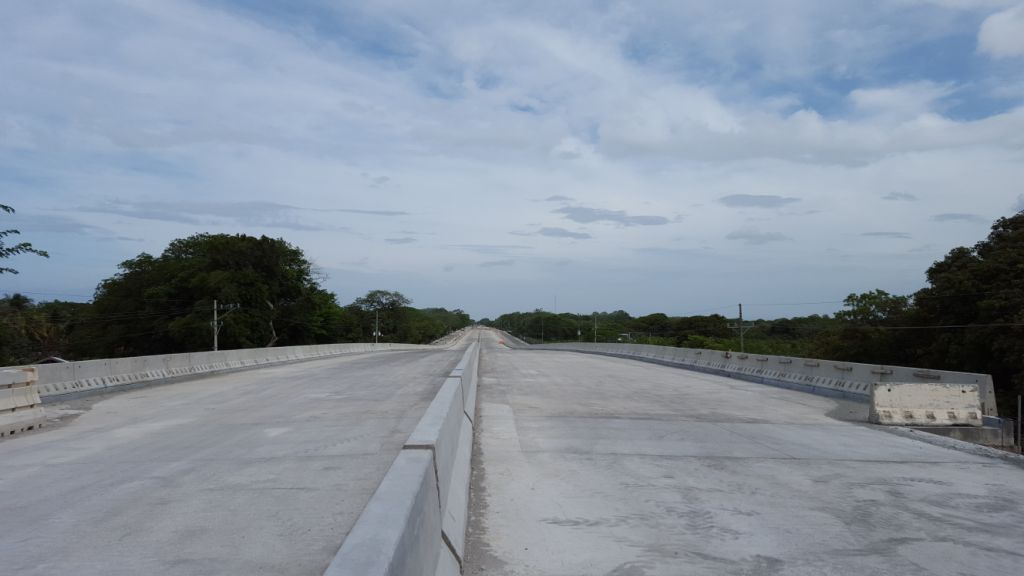
The President of Costa Rica visits the works on the Inter-American North highway, built by FCC
On 21 July, the President of the Republic of Costa Rica, Luis Guillermo Solís Rivera, paid a visit to 10 sections of the expansion and rehabilitation project on the Inter-American North highway between Cañas and Liberia. The President inspected the works, accompanied by the Minister of Public Works and Transport, Carlos Segnini, the Deputy Minister of Infrastructure, the engineer Guiselle Alfaro and the manager of the PIV I [Road Infrastructure Programme] Implementing Unit, Carlos Villalta. In attendance on behalf of FCC was the manager of FCC in Costa Rica, the engineer Mauricio González, and several other engineers and company representatives.
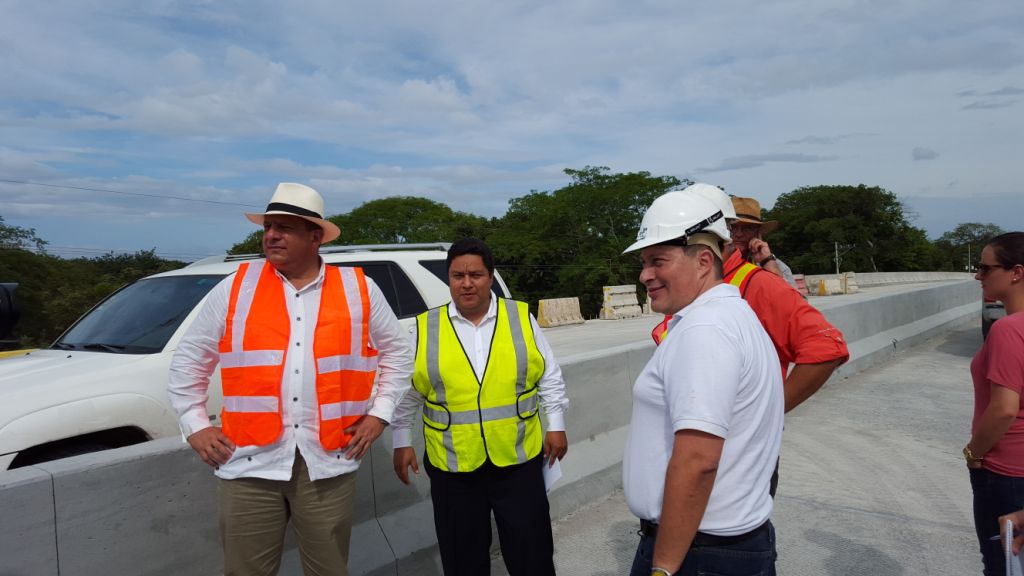
The works show significant progress in their 3 basic components: road, bridges and junctions or level crossings. The main project, executed by FCC, consists of expanding and reconstructing 4 50-kilometre lanes, 3 overpasses, 16 bridges, 11 zebra crossings, footpaths and other existing structures.
In addition, FCC is also participating in optimising its design and improving its operation, as a contribution to the project road safety. The total cost exceeds US $137 million (125.22 million euros).
To date, approximately 90 kilometres of concrete slabs have been laid in two lanes, which equates to around 45 kilometres of slabs in the road width, that is to say, 4 lanes. Another important advance is the construction of 11 pedestrian bridges.
Mauricio Gonzalez, FCC manager in Costa Rica, showed his delight at participating in this project which means "creating employment for over two years and contributing to the progress of the country's competitiveness".
President Solís expressed his satisfaction at the progress of the work and its upcoming full opening for service for the people of Costa Rica. Moreover, he reiterated his contentment with the design and technical specifications, and showed appreciation for the benefits it will bring to the country and the area of Guanacaste.
This works forms part of the Mesoamerican Pacific Corridor which makes it a strategic road for the mobilisation of people and transportation of goods inland in Costa Rica and Mesoamerica (from Mexico to Panama).