
The construction project of the Loeches “La Campiña” Environmental Complex has been awarded as “Best Municipal Work” in the 2021 Caminos Awards, organized by the CICCP Demarcation of Madrid
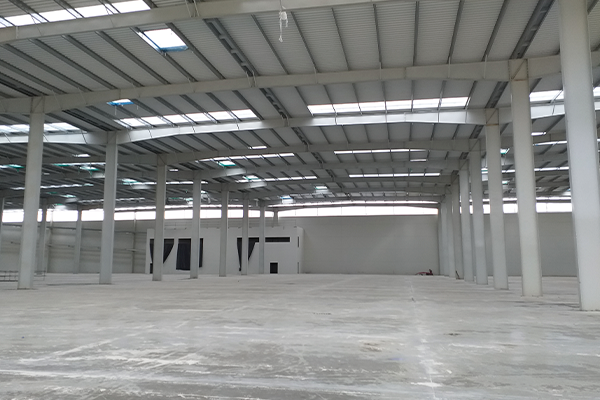
FCC Construcción has been the company in charge of the construction of the Loeches “La Campiña” Environmental Complex. It is the most modern Waste Treatment Plant in Spain, in its typology. It is also the first comprehensive Recycling Environmental Complex built in the Community of Madrid.
The facility has been designed to manage five different treatment lines, those for the rest, packaging, commercial, bulky and vegetable fractions. It will process up to a total of 265,250 tons per year.
Its execution has been in record time, clearly shortening the deadlines set by the client by two months and it occupies an area of 60 hectares and houses the most cutting-edge technology.
Annually it will receive 175,000 tons of the rest fraction, 45,000 of the organic fraction of selective collection (FORS), 17,750 of vegetable fraction, 13,000 of light packaging, 12,000 of commercial waste and 2,500 more of bulky waste. The pits have the capacity to store waste for more than 2 consecutive days without treatment. A powerful biological air treatment facility based on biofiltration has been designed to minimize odors. That is, some natural aerobic microorganisms will be used to break down the substances into carbon dioxide. water and various salts.
The infrastructure has been designed in such a way that all the warehouses susceptible to generation of odors are closed. In addition, monitoring, regulation and centralized control elements have been installed to automate the installation, motorized gates and air curtains in high-speed doors to prevent odor leaks. Thus, the air is extracted and channeled through polypropylene ducts to the deodorization spaces.
In order to optimize energy consumption, a photovoltaic installation has been implemented that will cover a significant part of the electrical needs required by the Loeches CMR.
The reuse of waste plays a decisive role in the complex, where more than 66,000 tons of fuel derived from waste (CDR) will be produced annually. For this, the rest fraction passes the filter of two optical separators that separate both paper and cardboard as well as plastics. Later, these wastes are divided into heavy and light. The former are pressed and packed in an insulating plastic that reduces gases and leachates before storing them in a reject cell. The latter, meanwhile, are allocated to CDR after being further reduced in size in a shredder.
The Loeches plant has an automatic park for the treatment of organic matter from selective collection (FORS). Once this fraction is mixed with the structuring agent, the mixture is directed to the biostabilization and composting facility. For its part, plant residues are also compost after balanced amounts of green (leaves or herbs) and woody fractions are shredded to obtain a suitable heterogeneous material. After the fermentation, latency and growth phases of the microorganisms, the mixture matures and is sieved. Once this operation is completed, two products are obtained: the overflow, which can be used to make 'mulching' on planting surfaces in parks or gardens, or compost ready for storage in silos and subsequent dispatch.