FCC Construcción begins the development of the PRACAN project
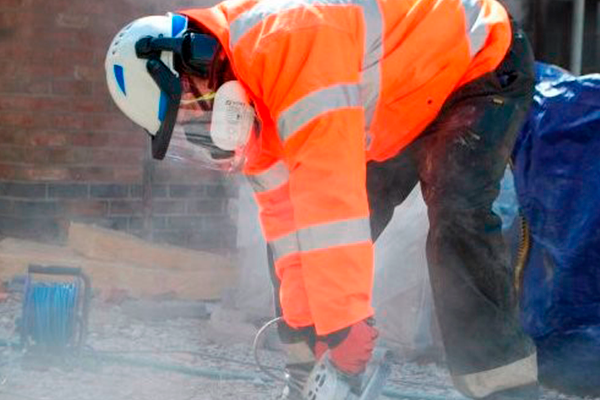
FCC Construcción begins the development of the PRACAN project, an active robotic platform for the identification, monitoring and control of carcinogenic agents in the construction sector
Cancer is currently one of the main causes of death in the world and represents one of the groups of diseases that generates the most concern among citizens.
In the workplace, preventing its development at source is key, taking into account the existence of agents considered carcinogenic in many industrial processes. The regulations on carcinogenic agents indicate that, whenever possible, said substance should be replaced by another that is free of risk. When this is not possible, it must be ensured that this substance is manufactured and used in a closed system. If none of the above is possible, companies must ensure that the level of exposure of workers is reduced to a value as low as technically possible, and always below the limit value established in the regulations.
Two of these carcinogens in the workplace are respirable crystalline silica (RCS) and asbestos.
Respirable crystalline silica (RCS) is present in materials commonly used in construction: aggregates, ceramic materials, cement, concrete, etc. Its harmful effects were included in the table of occupational diseases in 2018 and it has been classified as a carcinogenic substance in 2020 in Spain.
For its part, asbestos was a widely used material in construction during the 20th century, until its use was banned in 2002.

Currently, once the risk of exposure to a harmful chemical substance is identified, a risk assessment is carried out, which involves taking samples on site and subsequent analysis in the laboratory. Measures are set out below based on the results of the assessment. For the specific case of asbestos, it is necessary to make a work plan that must be presented to the labor authority before carrying out the work.
Research to obtain effective methods that can estimate the presence of toxic substances in real time with a view to establishing control and prevention measures is of vital importance.
The general objective of the PRACAN Project is to improve occupational risk prevention activity in construction environments, through the development of an innovative active robotic platform for the identification, control and monitoring of risks of carcinogenic agents.
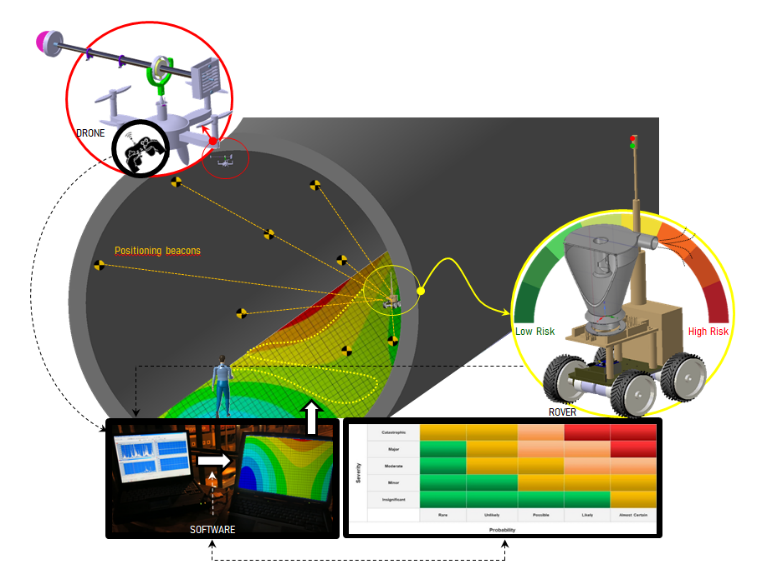
This platform will be based on a set of mobile nodes, one terrestrial and the other aerial, with the capacity to identify/estimate carcinogenic agents, specifically asbestos and respirable crystalline silica (CRS), and a system that allows establishing alerts and recommendations, supporting the decision of decisions of the PRL technicians in situations of risk of the carcinogenic agents considered.
The main innovations that this project presents are:
- Determine by means of a rapid mechanism if the existing materials in a work contain asbestos, carrying out the characterization without risk to the health of the workers. This procedure includes remote checks and an alert system.
- Estimation and mapping of the risk of inhalation of respirable crystalline silica, allowing greater effectiveness in reducing risk by having a map of affected areas, which is updated in real time.
The role of FCC Construcción as promoter of the project is to establish the starting point, in relation to the analysis of occupational risks in these two carcinogenic agents, and the definition of the requirements and technical specifications in line with the objectives to be achieved. FCC will participate in the design of the software application and will carry out the function and validation test at its work centers.
Consortium:


Collaborations:

Project approved and financed by: