
FCC Construcción participates in REBUILD 2024
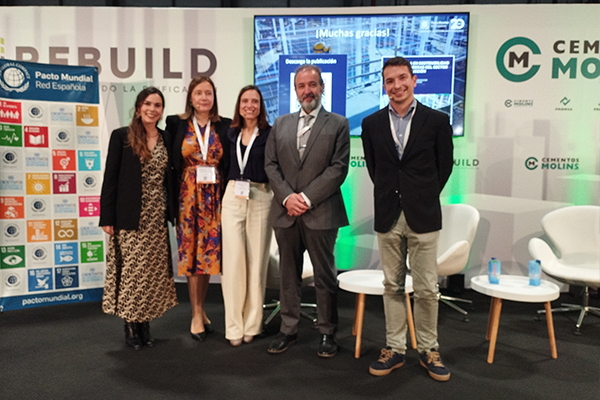
The construction and engineering sector, a fundamental pillar in the economic development of our country, is at a crucial stage of transition towards sustainability. That is why FCC Construcción has taken part in REBUILD. In collaboration with the UN Global Compact, based on the conclusions of the construction and engineering working group, a road map has been developed with 10 steps to make the sector more sustainable.
The Sustainability Roadmap for the construction and engineering sector has been presented at a special event in collaboration with REBUILD, the main trade fair for the sector in the country. During the event, representatives of the Working Group, such as FCC Construcción, Sacyr and Cementos Molins, actively participated and shared their perspectives and experiences on the importance of sustainability in the construction and engineering industry.
Antonio Burgueño, Sustainability Manager at FCC Construcción, focused on one of the main challenges facing the sector: decarbonisation. In his words: "The decarbonisation of the sector is urgent, but it is a joint effort between all the actors and stakeholders. The collaborative relationship in this aspect is vital".
For her part, Carla Fos, Corporate Sustainability Manager of Cementos Molins pointed out in her speech "The circular economy is a fundamental pillar for the construction sector. We offer construction solutions manufactured with recycled materials while promoting the decarbonisation of the sector".
Finally, Maria Encarnación Mateos Tejedor, Corporate Director of Quality, Environment and Energy of Sacyr wanted to highlight "Biodiversity plays a fundamental role in reducing the effects of climate change; that is why the protection and restoration of ecosystems is essential to meet the objectives of reducing emissions".
10 steps to make engineering and construction more sustainable
The Sustainability Roadmap presented for the construction and engineering sector represents a fundamental milestone on the road to the sustainable transformation of this key industry in Spain. Designed as a strategic roadmap, it identifies ten priority transformations aimed at jointly addressing the challenges of business sustainability:
- Promoting energy efficiency and decarbonisation.
- Boosting circularity in construction materials.
- Reduction of waste generated throughout the value chain.
- Reinforcement of health and safety measures in the workplace.
- Commitment to gender equality throughout the organisation.
- Guarantee of a living wage and decent work for all employees.
- Promoting due diligence and responsible management of the supply chain.
- Consolidation of transparency, good governance and integrity systems.
- Innovation and digitalisation of the construction and engineering sector.
- Knowledge sharing through strategic alliances.
In addition, the document also defines a series of quantifiable indicators and commitments for each of the transformations, with the purpose of carrying out a real measurement of their implementation and effectiveness. These commitments include specific targets to reduce net emissions, manage waste more efficiently and promote gender equality, among others.
In order to respond to the needs for change in the sector, the UN Global Compact Spain has developed different responses. Among them is the creation of the construction and engineering working group that seeks to position itself as a benchmark in business sustainability and from which the conclusions on which the Sustainability Roadmap for companies in the construction and engineering sector is based have emerged.
The main objective of this sectoral line of work is to promote sustainability in a vital industry for the country, thus contributing to the creation of more sustainable cities and communities (SDG 11) and the fight against climate change (SDG 13), both fundamental pillars of the UN's 2030 Agenda.
At UN Global Compact Spain, we recognise the importance of addressing the specific challenges faced by each sector on its path to sustainability. That is why this project is part of the sectoral approach that we work with key industries in our economy, as is the case with others such as the working group on tourism and the sustainability learning group aimed at SMEs. In this way, by working closely with companies in these sectors, we are able to identify areas for improvement and develop concrete and effective solutions that drive sustainability throughout the value chain.