
FCC Construcción and Convensa participate in BuildingSMART Portugal's OpenBIM Day 2025
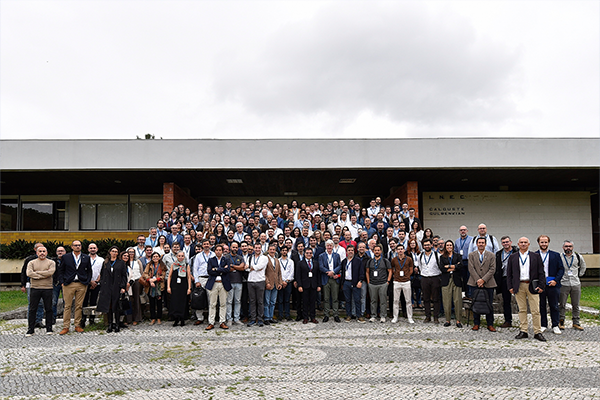
FCC Construcción and Convensa participate in BuildingSMART Portugal's OpenBIM Day 2025, an event designed to share the latest advances in the context of the openBIM community in Portugal.
FCC Construcción and Convensa are involved in various infrastructure projects in the country and are implementing different digitalisation tools, which have been presented to the BIM community. The forum has become a space for knowledge exchange, networking and, above all, practical innovation.
The Porto Metro project, between Casa da Música and Santo Ovídio, has established itself as a clear example of innovation within the AEC sector. Digital twins, virtual representations of the real world that include physical objects, processes, relationships and behaviours, and which allow the functioning of the territory and infrastructure to be replicated in a controlled and scaled environment, have been used in this project to visualise, analyse and control all kinds of relevant parameters and processes such as the progress of the work, generate 3D models from LIDAR point clouds and integrate with the GIS-BIM flow.
FCC Construcción, as a leader in international infrastructure development, is at the technological forefront of the sector, as demonstrated in the development of the Rubi Line of the Porto Metro, with the use of BIM methodology and Geographic Information Systems (GIS).
The project has an advanced technological integration system based on GIS-BIM flows that allows for the centralised and geolocated management of all construction models, as well as other spatial data sources related to the project, and the integration of data observed by external monitoring platforms. Through the ArcGIS platform and the Autodesk cloud, BIM models are automatically synchronised with real-time data, facilitating collaborative work between teams. In addition, thanks to LIDAR scans, 360º cameras and aerial photogrammetry, it is possible to generate high-precision digital twins, which are essential for technical monitoring and strategic decision-making.
In the words of Cristina Carrera, Team Lead Utilities & AEC at Esri Spain: "The use of digital twins with BIM&GIS information in an infrastructure project allows us to better understand and monitor the work, working in a collaborative environment, which translates into reduced time and costs and makes the management of project materials and resources more efficient.
By using an integrator system such as ArcGIS, which enables and promotes data and system interoperability and collaboration, it has been possible to better visualise and control the monitoring system composed of sensors such as inclinometers, piezometers and optical systems, among others, whose data can be consulted in a unified manner on the same dashboard and allow real-time observation of the evolution of the work and the environment.
FCC Construcción and Convensa, using Esri technology, have been able to catalogue all the tree populations located within the project's radius of action and label those that could be affected by the progress of the work and the degree of impact on them.
This information is accessible in real time and is shared with the municipal authorities and services, facilitating joint decision-making. In addition, the inventory and monitoring process has been optimised through the use of mobile applications, which speeds up data collection, reduces errors and improves the traceability of actions. This tool not only allows for the planning of protection or transplant measures, but also helps to maintain a comprehensive view of the project's environmental impact.