
FCC promotes Road Safety campaign in Costa Rica
FCC, the Citizen Services Group, launches a road safety campaign under the slogan "1,2,3 Puente, tres simples pasos para llegar seguro a casa" [1,2,3 Bridge, three simple steps to arrive home safe] in Costa Rica. It aims to raise awareness among the population of the importance of using pedestrian bridges in the FCC Construcción-led works project Cañas-Liberia.
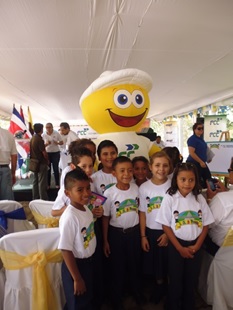
The project, developed in conjunction with the Ministry of Public Works and Transport (MOPT), the Inter-American Development Bank (IDB) and the Road Safety Council (COSEVI), aims to teach pedestrians, particularly children from schools close to the road, to use the pedestrian bridges in order to avoid deaths caused by road traffic accidents.
Playful and informative activities have been designed to educate pedestrians including: supplying informative material, educational talks, meetings with teachers and parents, billboards, puppet theatres, drawing competition and mural design competition.
These activities and the support from Pipo, one of the campaign's characters, hope to teach preschool and primary school children how to cross pedestrian bridges by following three simple steps.
Mauricio González, country director of FCC Construcción in Costa Rica, stated that this Social Responsibility project promotes the wellbeing of all citizens in Cañas, Bagaces and Liberia, and is framed under the company's social responsibility policy.
"Using the pedestrian bridge is protecting something very valuable: life. The campaign is characterised by a high informative element, with clear messages that promote a responsible road culture where children learn how to safely cross a pedestrian bridge", explained González.
In the project's area of influence there are six schools with around 1000 children who travel to class by foot, on horseback or by bike. Many travel without supervision from an adult.
The Cañas-Liberia section will have 11 pedestrian bridges that will be located in the main population centres in order to enhance pedestrian safety to those who travel daily around the area to go to health centres, work, places of study or home.
FCC encourages communities to be agents of change by protecting their lives through the use of pedestrian bridges.