
Friday lecture: Dentist Rodriguez-Vilaboa talks about the power of smiles
Doctor Beatriz Rodríguez-Vilaboa, a prestigious odontologist at the Vilaboa Clinic, participated in the second year of Friday lectures at the Nuestra Casa retirement home, where she talked about "The history of smiles in movies and art. Tips for a healthy mouth".
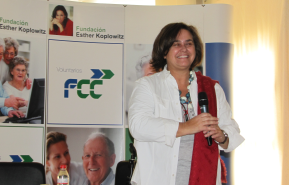
Beatriz is the sister of Débora Rodríguez-Vilaboa, who participated in the first year of Friday lectures with a talk entitled "We look after our mouth, our mouth looks after us".
Doctor Vilaboa, who graduated with honours in Medicine, Surgery and Dentistry from the Complutense University of Madrid, commenced with a discussion of the smile: how that gentle curving of the mouth indicates joy or pleasure.
She continued with a projection of the history of the smile through art, painting, history, cinema and literature. The projection included the enigmatic smile of Leonardo da Vinci's Mona Lisa as well as images from Murillo, Botero and Picasso. The doctor noted that it was not until the 20th century that artists portrayed broad smiles showing the subject's teeth. The residents greatly enjoyed this voyage through the history of the smile in the movies and Spanish songs.
Beatriz Rodríguez-Vilaboa also mentioned two periods of history in which mouth care was given particular attention: ancient Egypt, when the first toothpaste was developed, and China, which pioneered the toothbrush.
She concluded by discussing the therapeutic virtues of smiling. "When we smile, we move 22 different muscles, eliminate tension and relax the circulatory apparatus", she said.
After responding to questions from the audience, Dr. Rodríguez-Vilaboa gave some tips on how to keep your mouth healthy after the age of 50 and distributed free samples of a the products for palliating dry mouth.
Then the FCC Volunteers presented Dr. Beatriz Rodriguez-Vilaboa with a painting by the Fundación Síndrome de Down special employment centre as a token of their gratitude for her lecture, which concluded the first quarter of the year and had been received with considerable interest by the residents of the home, which was built by the Esther Koplowitz Foundation.