
The Tenerife Island Road project is more than 70% complete
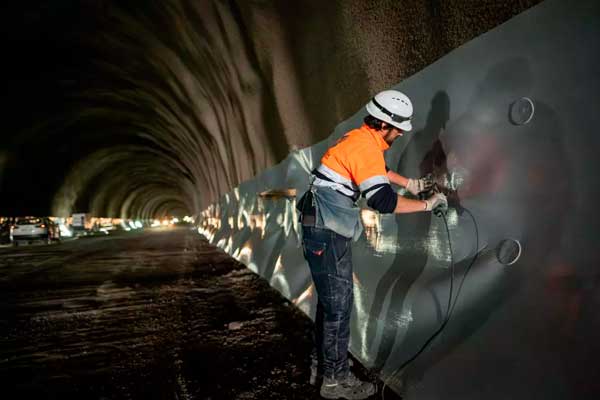
FCC Construcción is making progress on the western section of the Tenerife Island Road. This is one of the most important road infrastructure projects currently underway in the Canary Islands and will complete the connection between the northern and southern corridors on the west side of Tenerife. The construction of this infrastructure is generating significant economic and employment activity. Currently, 50 workers are directly employed, while another 110 indirect jobs are linked to the various auxiliary works and supplies associated with the project.
The new road will directly connect the TF-1 and TF-5 motorways on the west side of Tenerife and will replace the existing TF-82 along this route. The improvement will significantly increase road safety and will almost halve travel time between the north and south when traffic conditions are favorable. Mobility projections reflect the importance of the infrastructure. Studies estimate that during its first year of operation, the road will register around 17,000 vehicles per day, a figure significantly higher than the 5,000 vehicles projected in analyses carried out in the late 1980s. In the long term, the average daily traffic could reach 30,000 vehicles.
The opening of this section will also help redistribute some of the traffic that currently flows through eastern Tenerife, reducing pressure on the North Highway (TF-5) and helping to alleviate the congestion problems affecting the metropolitan area of Santa Cruz de Tenerife and La Laguna. In addition to its impact on mobility, the new infrastructure is destined to become a major driver of economic development for the northwestern regions of the island, facilitating the transport of goods and improving accessibility for businesses and residents.
The most emblematic infrastructure of the entire project is the Erjos Tunnel, set to become the longest in the Canary Islands. The project consists of two parallel tubes, each 5,095 meters long, of which 4,855 meters are mined tunnel. Drilling was carried out primarily using controlled blasting, supplemented by mechanical means when geological conditions required it. Work progressed simultaneously from all four access points and was conducted continuously, 24 hours a day, with three work shifts.
The excavation faces met on June 26, 2023, in the tube heading towards Santiago del Teide, and on August 14 of the same year in the tube heading towards El Tanque. The complete excavation of both tubes was then finished on October 10, 2024, in the phase known as "demolition." Alongside its technical significance, the project incorporates numerous environmental measures, including the restoration of old quarries by reusing the excavated material, the recovery of habitats of community interest, the construction of a park along the riverbank in Santiago del Teide, and various design modifications to minimize the impact on sensitive natural areas.
Among the planned measures, the construction of a self-consumption photovoltaic plant located above the false tunnel at the entrance to Santiago del Teide stands out. The installation will have a peak capacity of 589.68 kilowatts and will consist of 936 photovoltaic modules of 630 watts each. The energy generated will cover approximately 55% of the tunnel's electricity demand under normal operating conditions. The system will also include four 125-kilowatt nominal inverters and a transformer substation, allowing its integration into the infrastructure's energy facilities.
FCC Construcción is executing this highly complex technical infrastructure project, implementing excellent measures and programs for innovation and environmental protection.