
FCC starts construction works on the first tunnel of the Riyadh metro
FCC has begun operating the tunnelling machine that will build the first Riyadh metro tunnel. These works form part of the megaproject awarded to the FAST Consortium last year on which FCC is the leading company that is responsible for the design and construction of Consignment 3, which comprises lines 4 (yellow), 5 (green) and 6 (purple).
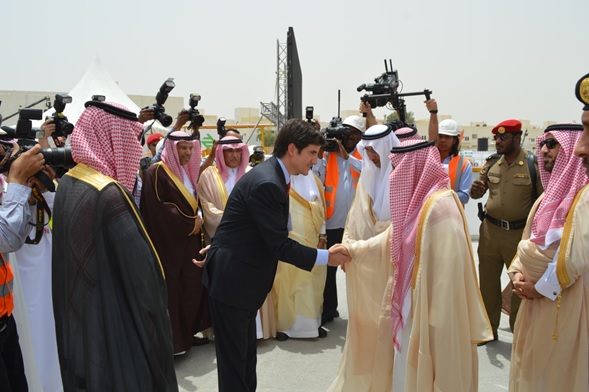
Riyadh Governor, Prince Faisal bin Bandar, was in charge of activating the first of the two tunnelling machines to be used to construct the metro's green line, which will incorporate 11 stations and 2 connections with the blue and red lines.
To construct the three lines awarded under the contract, the FCC-led consortium will use three 19 metre-wide tunnel boring machines that will excavate tunnels with a circular cross section.
The Dhafrah (Victoria in Arabic) tunnelling machine has started the excavation works on the first tunnel stretching 12.9 kilometres between the Riyadh air base and the King Abdul Aziz Historical Centre, and it is expected to complete an average of 75 to 100 metres each week. Overall, 7 tunnelling machines will be used to finish the Riyadh metro, which stands as the largest underground worldwide under construction, covering 186 kilometres and 85 stations.
Out of the €16.3 billion budget, close to €6 billion are used for the works on lines 4, 5 and 6. For these three lines of the FCC-awarded Consignment 3, there are 25 planned stations for which a total of 65 kilometres of metro lines will be required, 24 viaducts, 28 underground lines and 13 overground lines. 69 conductor-free automatic trains will be also be manufactured to meet the service demands of the three lines.
The first phase of the works began at the start of April with the excavation of "4 G1" station at Riyadh King Khalid International Airport. The station forms part of line 4 and will connect the financial district with the capital's airfield.
The works are expected to be completely finished in 2018 therefore FAST (also made up of Samsung, Alstom, Strukton, Freyssinet Saudi Arabia, Typsa, Atkins and Setec) will employ close to 15,000 workers of more than 33 nationalities. FCC is undertaking the challenge of designing and constructing a first-class metro for the capital of Saudi Arabia, which currently has a population of 5.7 million people. 2% of the population uses public transport, which equates to approximately 7.4 million journeys made daily.
The population is expected to rise to 8.3 million people by 2030, therefore the Riyadh metro, as well as boosting the local economy, will improve the Saudi quality of life.