
FCC Construcción featured in the CEOE catalogue of good environmental practices
FCC Construcción featured in the CEOE catalogue of good environmental practices with the BIOPROLIGNO and CERO RESIDUOS projects. BIOPROLIGNO transforms urban pruning waste into cutting-edge bioproducts, putting into practice a new methodology that uses urban pruning waste, which usually ends up in landfills, to transform it into advanced bioproducts for use in gardening and infrastructure maintenance. This activity is carried out in collaboration with the University of Alcalá (UAH) and with the participation of the companies FCC Medio Ambiente, which provides the waste and the test areas; MATINSA, which uses the products in its infrastructure maintenance and gardening work; and LAYNA, which is responsible for transforming the waste through pyrolysis.
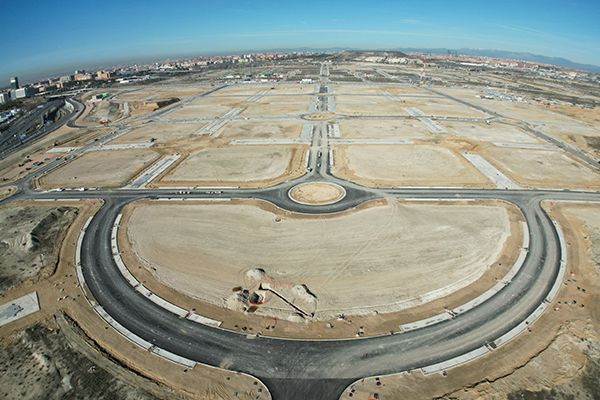
In addition, the company obtained ‘Zero Waste’ certification for two of its key projects: the Los Berrocales urban development in Madrid and the Playa de Vías railway works in Valladolid. This recognition also extends to FCC Industrial's offices in Barcelona, reinforcing its commitment to responsible waste management and the circular economy.
These initiatives reflect exemplary waste control and management, in line with the Circular Economy objectives defined in the company's Sustainability Strategy.
The circular economy is an essential solution in a world with increasingly limited natural resources. This economic model is based on the reduction, reuse and recycling of materials, minimising environmental impact and promoting efficiency in the use of resources. The Zero Waste Certificate recognises organisations that manage their waste in such a way as to prevent it from ending up in landfill. To obtain this certificate, a construction site must recover at least 90% of the waste it generates, i.e. it must recycle, reuse or transform it into new raw materials.
To facilitate this transition, the company has produced a Basic Guide for the implementation of the Zero Waste methodology, applicable to all its construction sites and permanent centres, with the aim of ensuring the maximum possible recovery of waste and avoiding its final management through disposal treatments.