
FCC Industrial aplica soluciones Lean y BIM en el nuevo hospital de Alcañiz (Teruel)
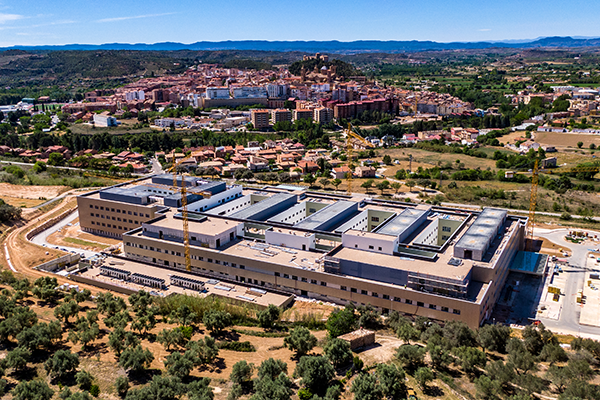
FCC Industrial aplicó soluciones Lean y BIM en el nuevo hospital de Alcañiz, en Teruel. El nuevo hospital de Alcañiz en Teruel, combina un diseño adaptado al terreno con tecnologías avanzadas como BIM y Lean Construction, en una apuesta por la eficiencia energética, la atención sanitaria de calidad y la sostenibilidad.
El hospital cuenta con 193 camas y se desarrolla sobre una superficie construida de 53.241,19 m², ubicada en una parcela de 92.943 m². El terreno, alargado y en pendiente, condicionó un diseño arquitectónico que se adapta a la topografía mediante plataformas escalonadas en tres niveles.
En el nivel más bajo se sitúa el aparcamiento, que actúa como base del edificio. En el nivel intermedio (nivel 0) se ubica el acceso principal, elevado respecto al vial de entrada, con vistas directas al núcleo histórico de Alcañiz, al otro lado del río Guadalope. En el nivel +1, al noreste, se encuentra la calle de servicios, donde se sitúan los accesos logísticos y de suministros. Las centrales de instalaciones se alojan en un edificio independiente conectado al hospital mediante una galería subterránea. Las áreas de hospitalización se agrupan en un bloque exclusivo, rodeado de zonas ajardinadas.
Este diseño singular, integrado en un entorno natural de alto valor ambiental, combina funcionalidad y estética, con equilibrio entre superficie y altura para evitar recorridos excesivamente largos. El centro está previsto para dar cobertura sanitaria a una población de referencia de 72.290 personas de 85 municipios.
El edificio se distribuye en planta baja y tres alturas, dejando la última planta diáfana para futuras ampliaciones. Actualmente dispone de 162 camas (frente a las 125 del anterior hospital), con posibilidad de ampliación hasta 266. Incluye además una Unidad de Cuidados Intensivos (UCI) con 8 puestos y un área de Urgencias. También cuenta con un bloque quirúrgico (6 quirófanos y 6 puestos de URPA), un bloque obstétrico (4 paritorios), zona de Rehabilitación, 13 salas de Radiodiagnóstico y un área de Servicios Ambulatorios con 62 consultas externas, 20 puestos de hemodiálisis, 5 de extracción de muestras y tres hospitales de día: Oncológico (11 puestos), Médico (6) y Quirúrgico (8). El hospital incorpora laboratorios de Análisis Clínicos, Microbiología y Anatomía Patológica; Farmacia; Medicina Preventiva; Atención al Usuario; Documentación; áreas de Docencia e Investigación con salón de actos y biblioteca; y zonas para servicios generales, personal y gerencia.
En el exterior, dispone de un aparcamiento con 600 plazas y un helipuerto operativo las 24 horas.
El edificio ha sido diseñado bajo criterios de sostenibilidad y eficiencia energética. Se han instalado 474 paneles fotovoltaicos que generan 213 kWp, con una producción eléctrica anual estimada de 330 MWh. Además, se incorporaron 186 m² de paneles solares térmicos para la producción de agua caliente sanitaria, cubriendo el 78% de la demanda del centro.
Los equipos de climatización son de alta eficiencia, y tanto el aislamiento térmico de la envolvente como las carpinterías exteriores superan los requisitos normativos, reduciendo significativamente la demanda energética. Asimismo, los patios interiores ajardinados favorecen la ventilación natural y generan microclimas de transición entre el exterior y el interior del edificio.
La obra ha integrado el modelo BIM (Building Information Modeling) como herramienta central de gestión, permitiendo el acceso a una plataforma común en la que todos los actores del proyecto disponen de la última versión del modelo, con trazabilidad completa de cambios y documentación «As Built» precisa y actualizada.
Asimismo, se han aplicado metodologías de planificación colaborativa Lean Construction, como el Takt Planning, que organiza la producción por zonas y tiempos para optimizar la ejecución, y el Last Planner System, que fomenta la coordinación entre equipos, asegurando un ritmo de trabajo continuo y eficiente. Todo el proceso se ha apoyado en una plataforma de comunicación centralizada que garantiza intercambios de información ágiles, seguros y documentados.
El nuevo hospital de Alcañiz ha sido galardonado con el Premio a la Excelencia Kobah España 2024, destacando como el primer hospital público en España ejecutado íntegramente con metodología Lean, y convirtiéndose en un ejemplo de innovación, sostenibilidad y eficiencia en la infraestructura sanitaria pública.